Laso Finance Review 2026: Truly No-KYC Stablecoin Visa, FinCEN-Registered
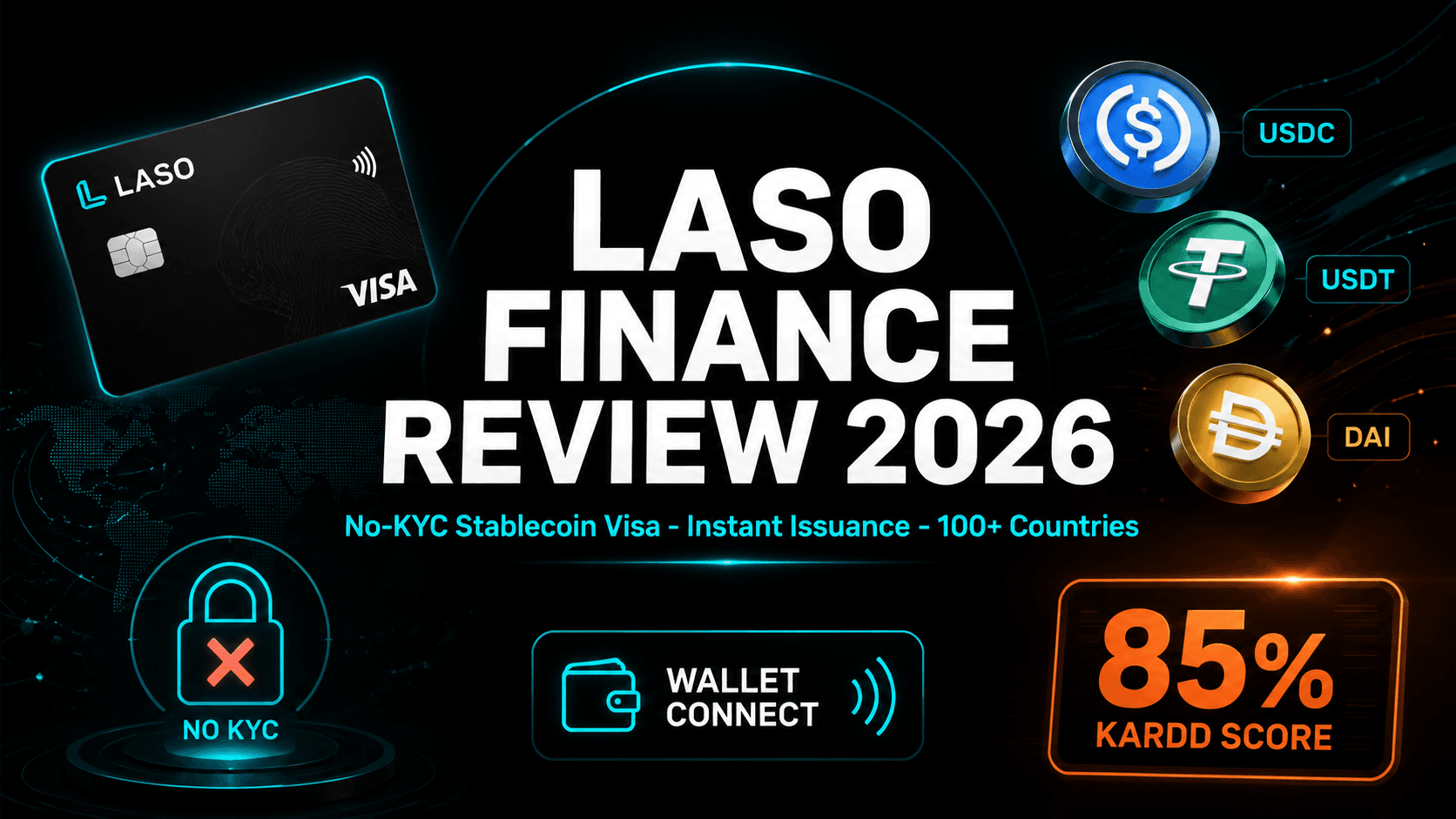
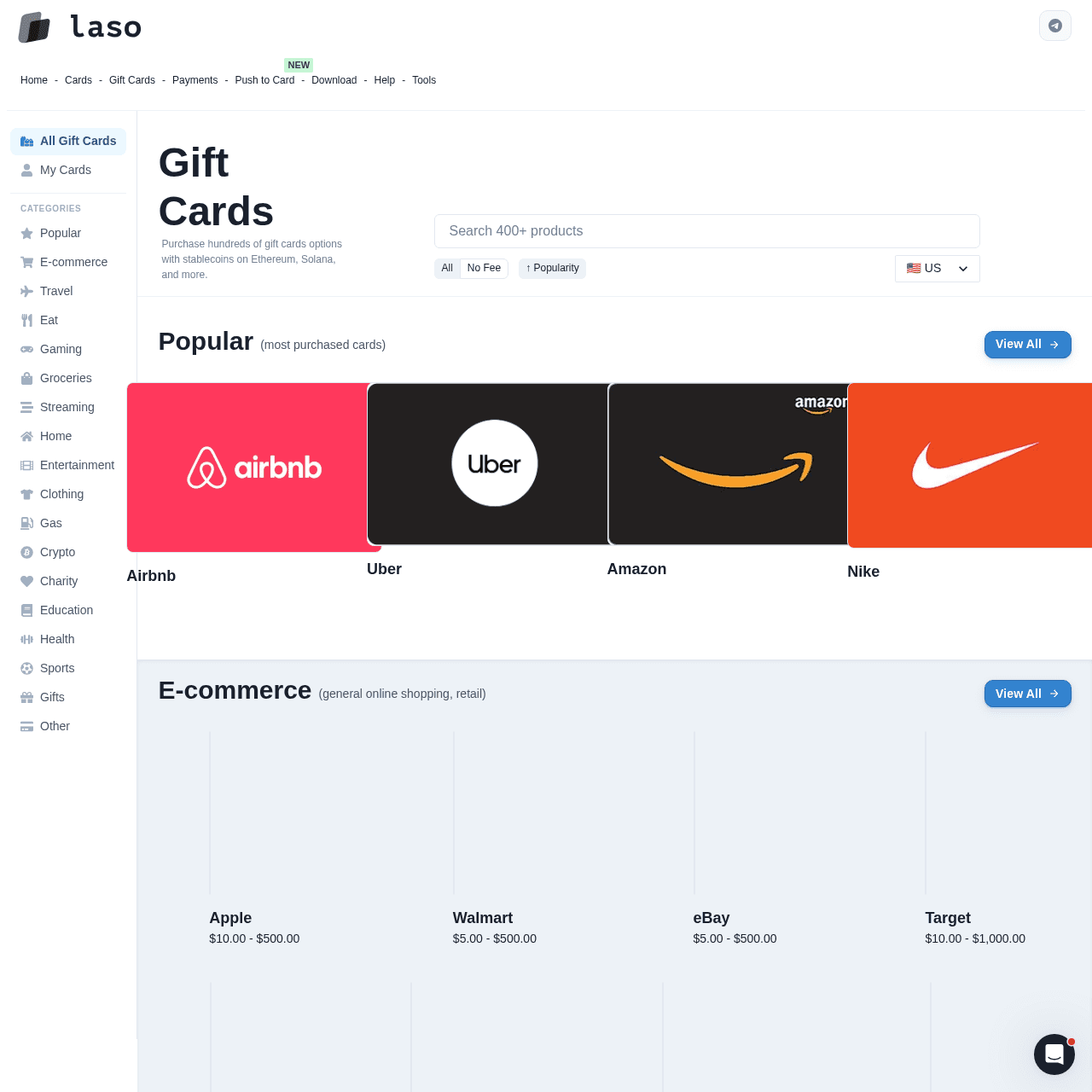
Our verdict: Laso Finance is a genuinely no-KYC stablecoin prepaid Visa card — no passport, no email, no phone. You connect a crypto wallet, deposit USDC/USDT/DAI from any of 10+ chains, and a $1,000 virtual card is issued in seconds. Add it to Apple Pay and spend anywhere prepaid Visas are accepted. The constraints: $1,000 per card lifetime limit, no physical card, no ATM withdrawals. The wins: real privacy, FinCEN-registered MSB compliance via on-chain monitoring, and a 2,000+ brand gift card store as a bonus.
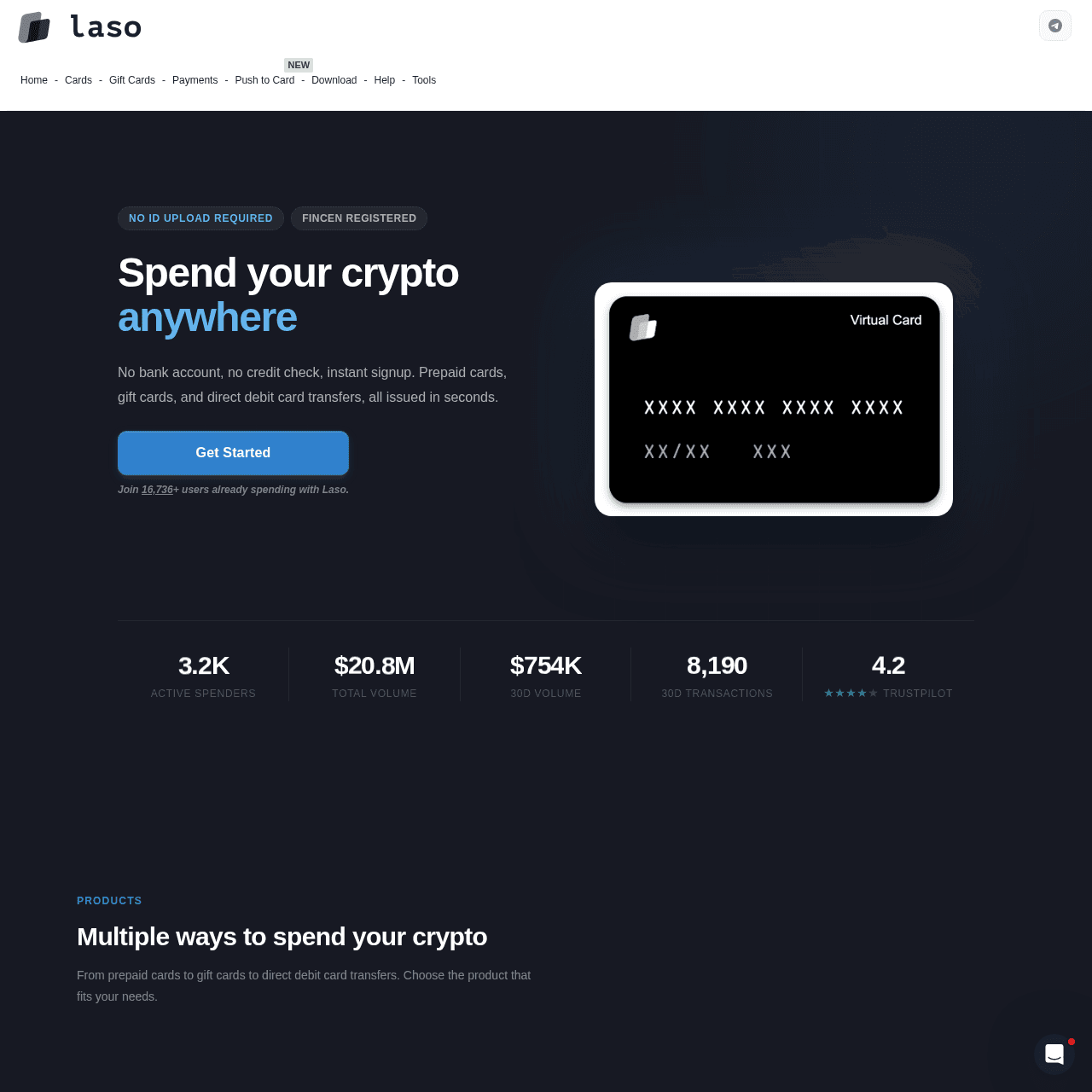
Laso Finance is the world's first truly no-KYC stablecoin prepaid Visa. No identity documents. No email. No phone number. Just connect your wallet, deposit USDC/USDT/DAI, and a virtual card is issued in seconds — spendable anywhere prepaid Visas are accepted, online or via Apple Pay/Google Pay. Founded in 2022, registered with the US Treasury as a FinCEN MSB, and now serving 16,736+ users with $20.8M in total card volume processed.
We tested Laso Finance for everyday spending, the gift card store, and direct debit card transfers. Here is the honest breakdown: features, the $1,000-per-card limit explained, fees, the legitimate compliance angle (Stripe + Celtic Bank infrastructure), and how it compares to other no-KYC options like XKard, SolCard, and BingCard.
What is Laso Finance?
Laso Finance LLC is a US-registered Money Services Business (FinCEN registration #31000328975254) headquartered in Austin, Texas. The product is a virtual prepaid Visa card funded by stablecoins, with a unique compliance model: instead of collecting your identity and storing it in a database, Laso uses on-chain transaction analysis, wallet behavior monitoring, and device fingerprinting to satisfy AML obligations. The result is a card you can issue without uploading a single document.
Card issuance is powered by Stripe and Celtic Bank infrastructure (per a 2023 Fintech Business Weekly investigation), which is why the card actually works at every Visa-accepting merchant globally rather than getting bounced like sketchy crypto cards from offshore issuers. The trade-off is that each card is non-reloadable and capped at $1,000 lifetime — you simply buy a new one when needed.
Key Features
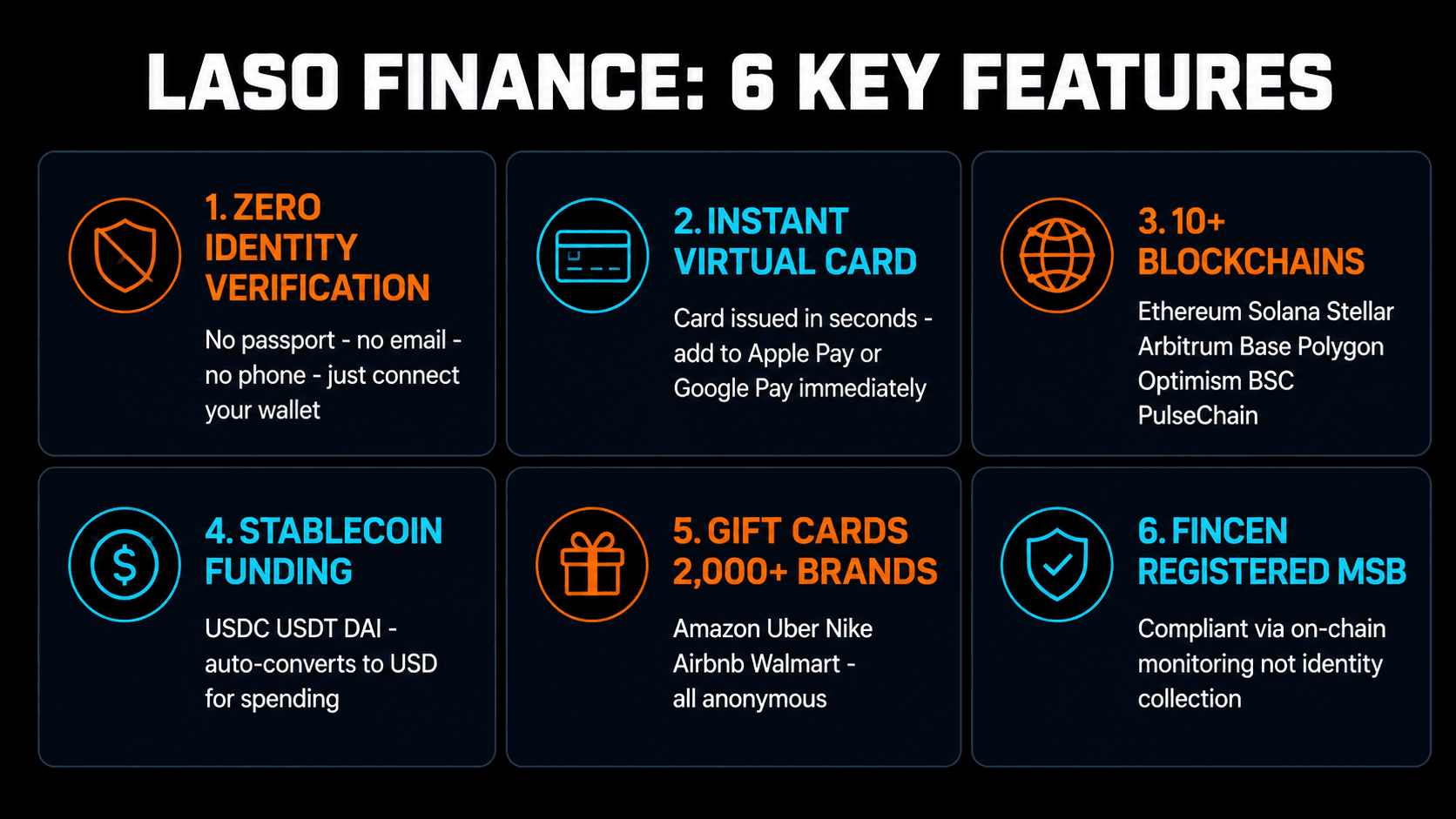
- Zero identity verification. No passport, driver's license, selfie, email, or phone number required. The kycnot.me "identity-free registration" badge is verified.
- Instant virtual card issuance. Card details (number, CVV, expiry) ready in seconds after stablecoin deposit confirms on-chain. Add to Apple Pay, Google Pay, or Samsung Pay immediately.
- 10+ blockchain networks supported. Ethereum, Solana, Stellar, Arbitrum, Polygon, Optimism, Base, BSC (BNB Chain), PulseChain, and more. Fund from any major self-custodial wallet without bridging first.
- Three stablecoins: USDC, USDT, DAI. Auto-converted to USD at the moment of card issuance.
- 2,000+ gift card brands. Amazon, Uber, Nike, Airbnb, Walmart, Steam, Apple, Google Play, Netflix, Spotify, and many more. Bought directly with stablecoins, no card needed.
- Direct debit card transfers. Send funds straight to an existing debit card you already own (one-time transfer, also no-KYC).
- FinCEN-registered MSB. Operates legally in the US; compliance via on-chain monitoring rather than data collection.
- 100+ countries. Globally accepted. Excluded: Belarus, Cuba, Iran, Myanmar, North Korea, Russia, and other US-sanctioned regions.
How Laso Finance Works
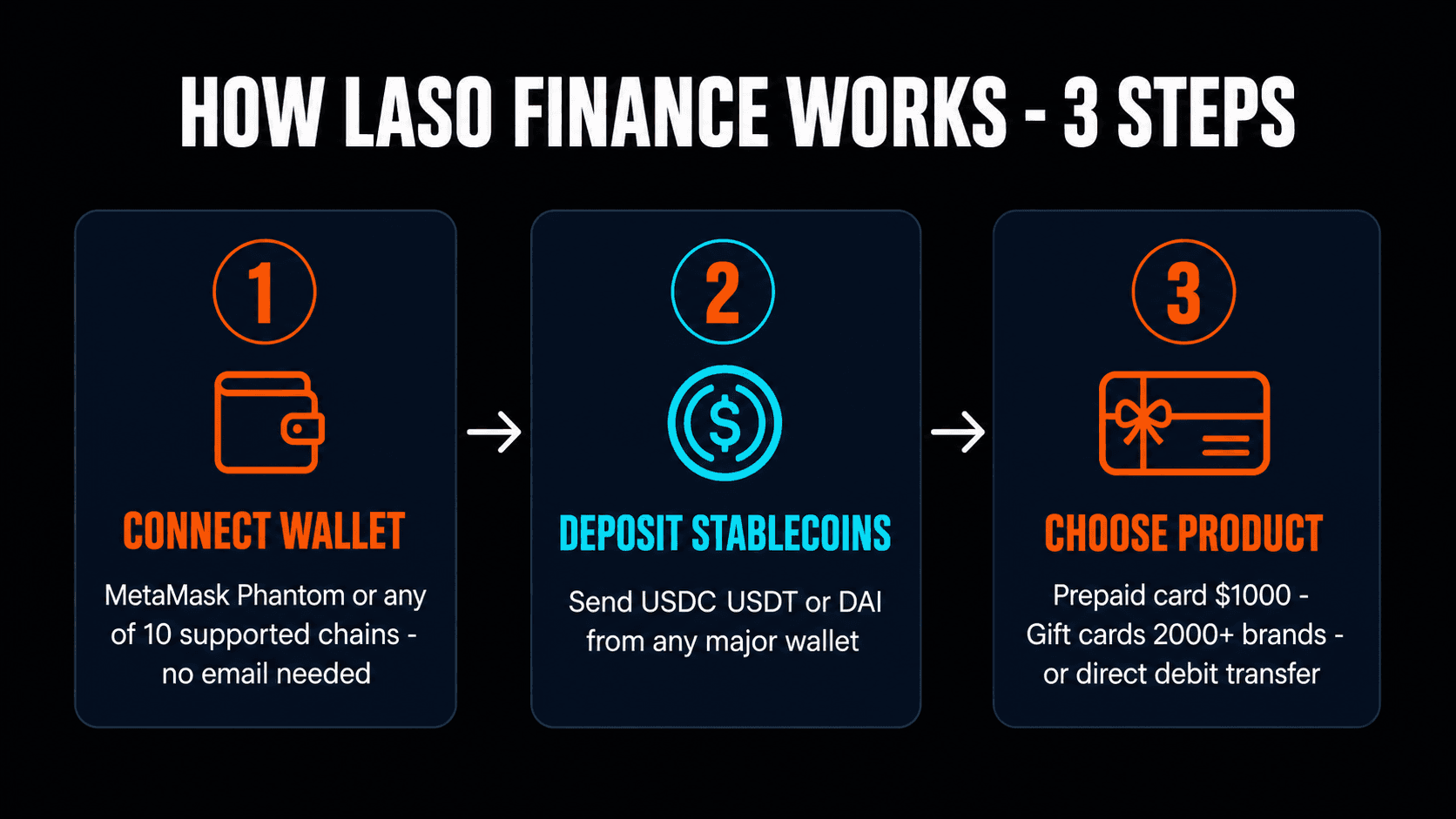
- Connect your wallet. Visit laso.finance and link a wallet (MetaMask, Phantom, Rainbow, or any of 10+ supported chains). No email or phone required at this step or later.
- Deposit stablecoins. Send USDC, USDT, or DAI from your wallet to your Laso deposit address. Network gas fees apply (Solana <$0.01, Ethereum $1–5).
- Choose how to spend. Three product options: (a) prepaid Visa card, (b) gift cards from 2,000+ brands, or (c) direct debit transfer to an existing debit card.
- Add to Apple Pay (cards). Card details are issued instantly. Add to your phone wallet for contactless tap-to-pay.
- Spend. Use online (card number + CVV) or in-store (Apple Pay/Google Pay/Samsung Pay).
Pricing & Fees
- Card issuance: Free
- Annual fee: $0
- Top-up fee: $0 stated, but a deposit spread applies (varies by chain and stablecoin)
- FX fee on non-USD transactions: ~2%
- Refund fee on unused balance: 5% if you request a refund
- Replacement / shipping: Free (virtual cards only, no physical)
- Network gas fees: User pays (Solana ~$0.01, Ethereum $1–5, Base/Polygon <$0.10)
- ATM withdrawals: Not supported
Effective cost: If you fund $1,000 in USDC on Solana, total cost is roughly $1.00–1.50 in network fees + Visa network spread (typically 0.5–1% embedded in the conversion rate). Net ≈ $1,005–1,012 to spend $1,000. That's competitive with mid-tier no-KYC cards.
The $1,000 Per-Card Limit Explained
This is the single most important constraint to understand. Each Laso card has a lifetime $1,000 cap — you can spend less, but never more. Once exhausted, the card retires. There is no reloading.
Workaround: Buy multiple cards. Laso supports up to approximately 6 card issuances per day per user (the practical limit reported by users). For routine $200–500 monthly spending, one card lasts a long time. For higher volume, you stack cards. Each card adds to your Apple Pay wallet separately.
Why the limit? It's the FinCEN compliance angle. Low per-card balance is part of the AML risk model that lets Laso operate without identity collection — high-value transactions get extra on-chain scrutiny instead of identity checks. If you need higher per-card limits with no KYC, look at XKard ($100K/year reloadable cap on the Whale plan).
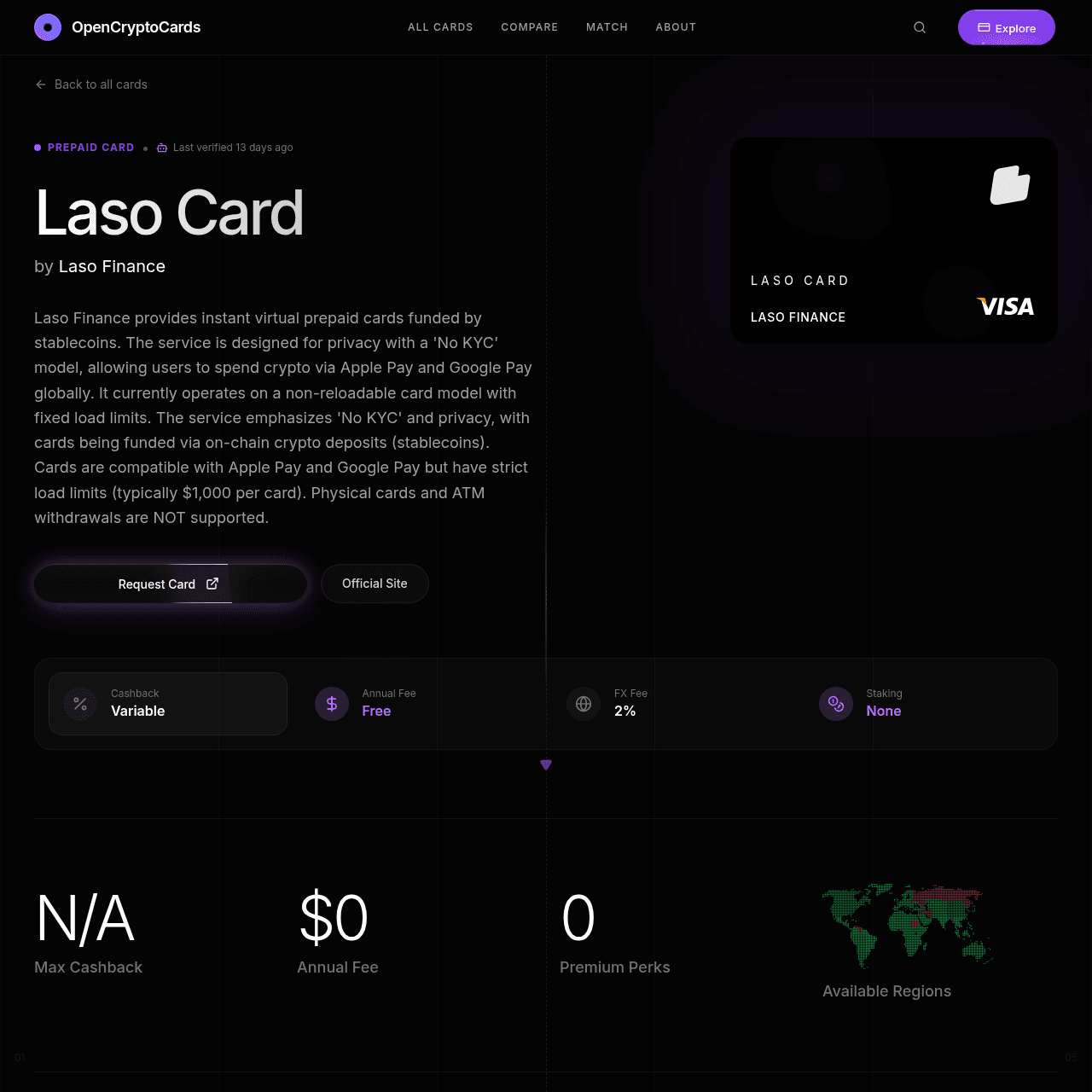
Beyond the Card: Gift Cards & Direct Transfers
Laso's gift card store is genuinely useful. 2,000+ brands — Amazon, Uber, Nike, Airbnb, Walmart, Apple, Google Play, Netflix, Spotify, and a long tail of regional retailers. Bought with stablecoins, delivered as digital codes within minutes, no per-card $1,000 cap (you buy whatever denomination the brand offers). For specific use cases (Amazon shopping, subscription services), this can be more efficient than a prepaid card.
Direct debit card transfers are the third product. You input an existing debit card you already own (any Visa or Mastercard), Laso converts your stablecoins, and the funds land on that card. One-time transfer, no card to manage afterward. Useful for topping up a card you already have.
Legitimacy Check
"No-KYC" raises eyebrows. Here's why Laso Finance is structurally different from sketchy offshore cards:
- FinCEN-registered MSB (Money Services Business, registration #31000328975254). Public on the FinCEN database.
- US LLC registered in Texas with a public office address (5900 Balcones Drive Suite 100, Austin, TX 78731).
- Stripe + Celtic Bank infrastructure (per Fintech Business Weekly, July 2023). Cards are issued through legitimate US banking rails.
- On-chain monitoring handles AML obligations — the regulatory bar is satisfied without traditional KYC. This is novel but legally defensible under current FinCEN guidance.
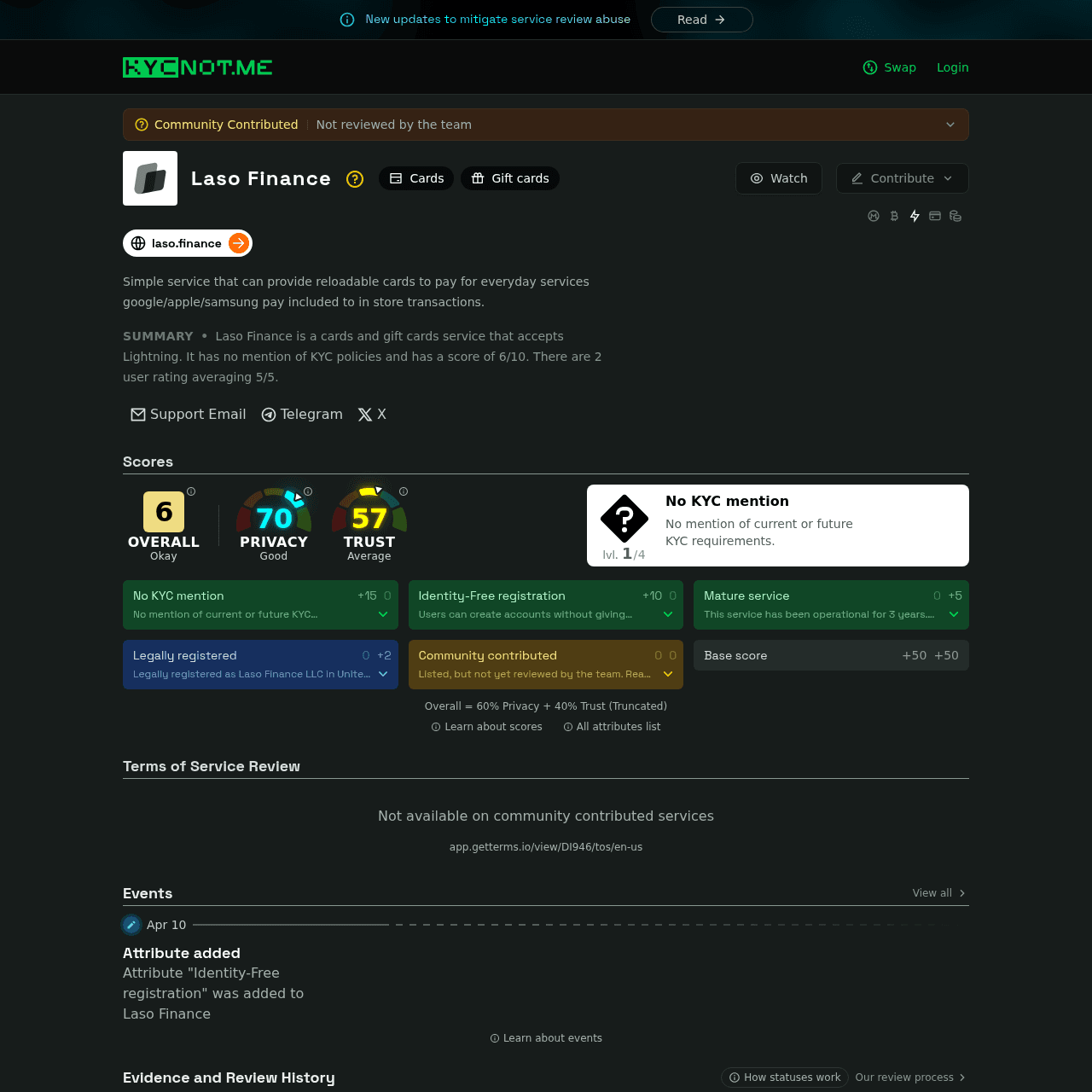
- 4.2 Trustpilot rating with public user reviews. KYCnot.me independent listing rates 100% positive on 5 user ratings.
- 16,736+ users and $20.8M cumulative card volume. Real product, real usage.
What it does not mean: that the regulatory landscape is permanently friendly to this model. No-KYC card products operate in a shifting compliance environment. If FinCEN guidance changes, Laso's model could need adjustment. But as of May 2026, Laso is a legitimate, registered, operating business.
Pros & Cons
Pros
- Genuinely zero identity collection
- FinCEN-registered MSB (legitimate compliance)
- Stripe + Celtic Bank infrastructure (real card issuance)
- Instant virtual card delivery
- 10+ blockchain networks supported
- Gift cards from 2,000+ brands as bonus product
- Direct debit card transfers also supported
- Apple Pay + Google Pay + Samsung Pay
- 100+ countries available
- Free card issuance, no annual fee
Cons
- $1,000 lifetime cap per card (must buy new ones)
- Non-reloadable model (changed from earlier reloadable cards)
- No physical card option
- No ATM cash withdrawals
- 2% FX fee on non-USD transactions
- 5% refund fee on unused balances
- Limited account recovery if issues arise (no identity = no recovery)
- Newer platform (founded 2022) — less track record than legacy cards
- Only stablecoins supported (no BTC or ETH directly)
- Regulatory risk if FinCEN guidance shifts
Laso vs Competitors
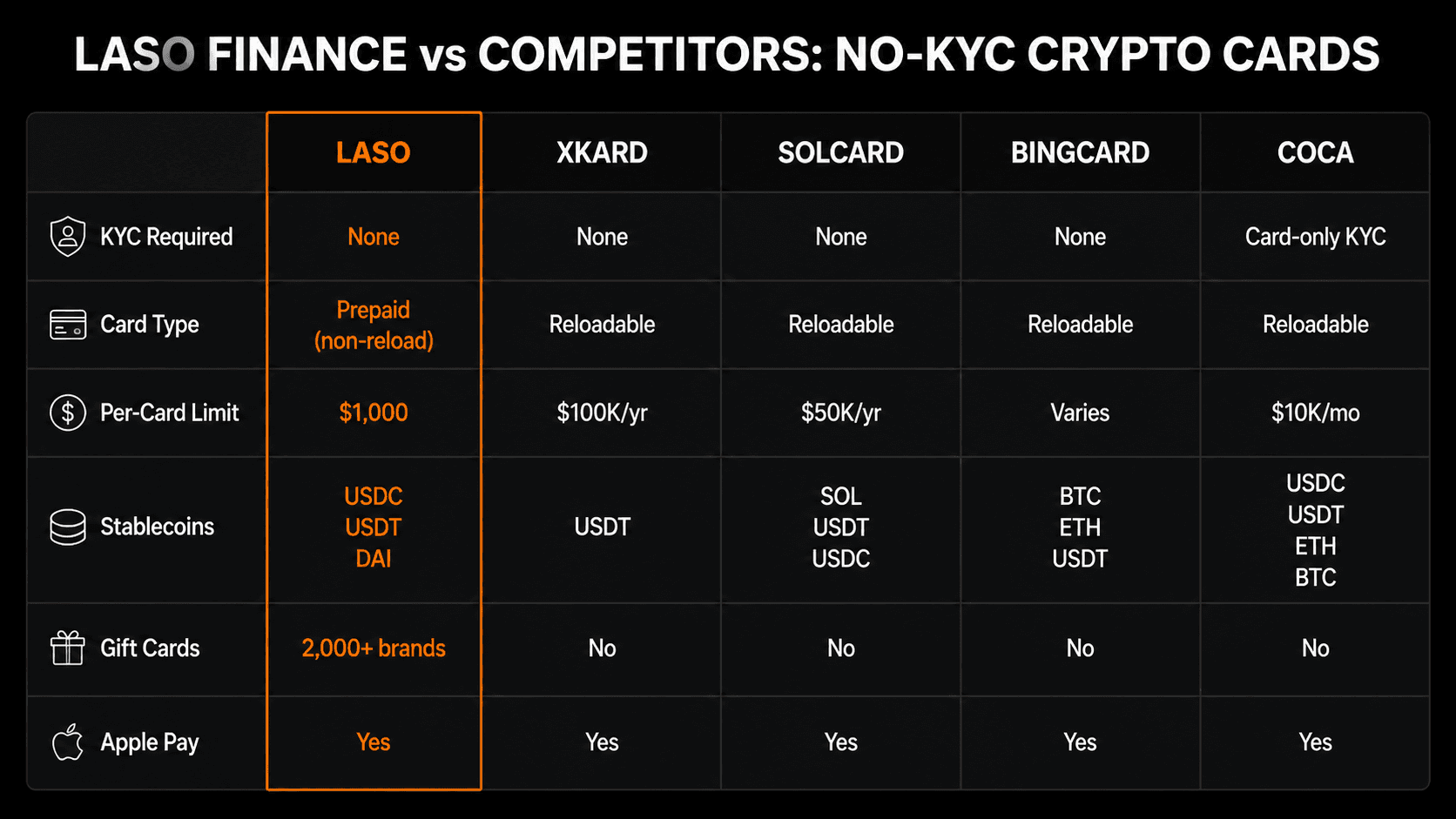
| Feature | Laso | XKard | SolCard | BingCard |
|---|---|---|---|---|
| KYC | None | None | None | None |
| Email Required | No | Yes | Yes | Yes |
| Card Type | Virtual prepaid (non-reload) | Reloadable virtual + physical | Reloadable virtual | Reloadable virtual |
| Limit | $1,000/card | Up to $100K/yr | $50K/yr | Varies |
| Stablecoins | USDC USDT DAI | USDT | SOL/USDT/USDC | BTC/ETH/USDT |
| Gift Cards | 2,000+ brands | No | No | No |
| ATM | No | Yes (physical) | No | No |
Bottom line: Laso wins on absolute privacy (no email even) and the gift card store. XKard wins for higher annual spend caps and physical card / ATM access. SolCard wins for Solana-native users. See our full anonymous crypto card guide for the deeper privacy comparison.
Who Should Use Laso Finance?
- Privacy maximalists. No email, no phone, no ID. The most identity-free crypto card on the market.
- Routine smaller spenders. If your monthly card spending is under $1,000, one Laso card lasts a month and reset is painless.
- Gift card buyers. If you mostly spend at Amazon, Uber, Apple, or other supported brands, the gift card store skips the card entirely.
- Multi-chain stablecoin holders. 10+ chains supported. If your USDC is scattered across Ethereum, Solana, and Base, Laso accepts all of it natively.
- Privacy travelers. Use one card per country or per trip without leaving an identity trail.
Who Should NOT Use Laso Finance?
- High-volume monthly spenders. $5,000+/month means buying 5+ cards/month. XKard Whale at $100K/year cap is more practical.
- ATM cash users. No ATM support. Use KAST or XKard for cash withdrawal.
- Physical card needers. Virtual only. No plastic option.
- BTC or ETH spenders. Stablecoin-only. Convert your BTC/ETH to USDC first.
- Users in sanctioned countries. Belarus, Cuba, Iran, Myanmar, North Korea, Russia excluded.
Final Verdict
Laso Finance is our top pick for privacy maximalists who want a Visa they can spend immediately without giving up anything. The compliance model (FinCEN MSB + on-chain monitoring) makes it structurally legitimate, the Stripe + Celtic Bank infrastructure makes the cards actually work everywhere, and the gift card store doubles the utility. The $1,000 per-card limit is the friction — if your spending fits within that, Laso is hard to beat. If it doesn't, you're looking at XKard, KAST, or COCA depending on your other priorities.
FAQ
Is Laso Finance really no-KYC?
Yes. Laso Finance does not collect any personal information — no passport, no email, no phone number, no selfie. You connect a crypto wallet, deposit stablecoins, and receive a virtual prepaid Visa card. Compliance is handled via on-chain transaction monitoring and device fingerprinting rather than identity collection. Laso is a FinCEN-registered MSB (registration #31000328975254).
What is the spending limit on a Laso Finance card?
$1,000 per card (lifetime). Cards are non-reloadable in the current model — once you spend the balance, the card retires. To spend more, you buy additional cards. Up to approximately 6 cards per day per user.
Does Laso Finance support physical cards or ATM withdrawals?
No. Laso is virtual-only. Cards are added to Apple Pay, Google Pay, or Samsung Pay for contactless payments, plus used as a card number for online purchases. ATM cash withdrawals are not supported. For physical card and ATM access with no KYC, see XKard.
What stablecoins and chains does Laso Finance support?
Stablecoins: USDC, USDT, DAI. Chains: Ethereum, Solana, Stellar, Arbitrum, Polygon, Optimism, Base, BSC, PulseChain, and more (10+ chains). You can fund from any major self-custodial wallet.
What countries does Laso Finance work in?
100+ countries globally. Excluded jurisdictions include Belarus, Cuba, Iran, Myanmar, North Korea, Russia, and other US-sanctioned regions.
Is Laso Finance legal?
Yes. Laso Finance LLC is a US-registered limited liability company headquartered in Austin, Texas, registered with the US Treasury's Financial Crimes Enforcement Network (FinCEN) as a Money Services Business. Card issuance is powered by Stripe and Celtic Bank. The no-KYC compliance model is novel but legally defensible under current FinCEN guidance.
What are the fees on Laso Finance?
Card issuance: free. Annual fee: $0. Top-up fee: $0 stated (deposit spread applies). FX on non-USD: ~2%. Refund fee: 5% on unused balances. Network gas fees paid by user (Solana ~$0.01, Ethereum $1–5).
Are gift cards bought through Laso also no-KYC?
Yes. The 2,000+ brand gift card store uses the same wallet-connect flow as the prepaid card — no identity collection. Buy Amazon, Uber, Apple, or Steam gift cards with USDC, USDT, or DAI and receive the digital code instantly.